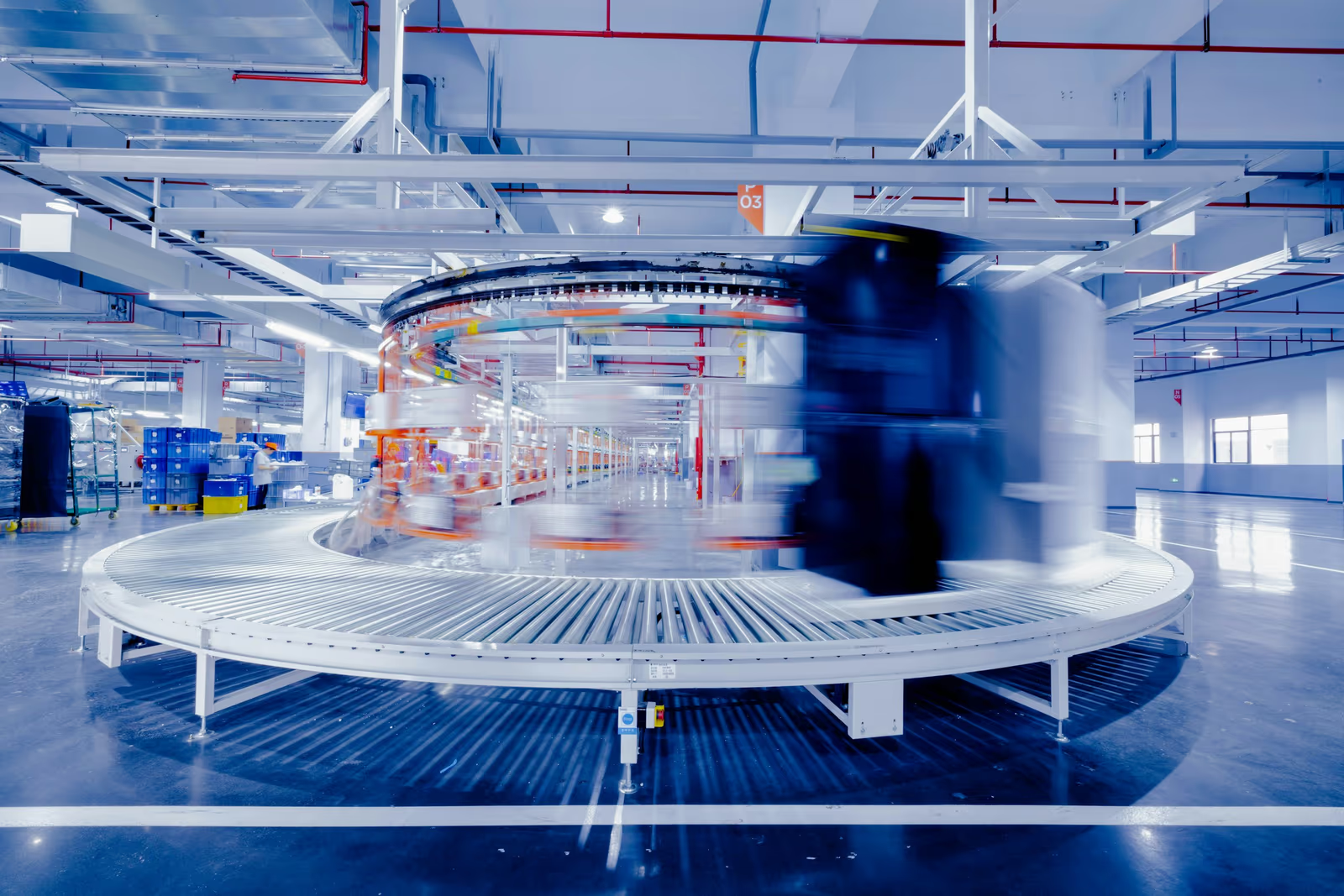
The vendor’s comparable installations rarely resembled this client’s building
A case team was testing whether an automation investment in a contract warehouse would pay back. The vendor’s proposal listed installations at other sites, each with the savings it had delivered. Every one of those installations was real. Whether any of them resembled the building in question was a separate matter, and the proposal did not answer it.
Published market figures and benchmarks give a range. They do not say where a building sits inside that range. Automation handles the standard order efficiently and the unusual one far less so, so payback depends on how much of the volume is standard. Nothing the client could read told them that. The people who knew were operations directors who had commissioned these systems and then lived with them.
We visited comparable sites and watched what the exceptions cost
Rather than test the model against more figures, we scoped visits to warehouses already running comparable systems. Sites were chosen for a similar order mix rather than a similar size, because the mix of orders drives payback more than floor area does. Every visit followed the same written protocol, so what one site showed could be set against another.
Exception handling was watched deliberately, because that is where the savings in the model tend to disappear. Former operations directors and former warehousing leads, the people who had commissioned systems like these, then read what the visits had found and said what it would mean on this site. Every expert cleared the Nextyn compliance framework, and site access was arranged the same way.
The case survived on a phased build and a narrower scope
The visits showed which of the vendor’s comparable installations genuinely resembled the client’s operation, and how much of the modeled saving the exception load would take back. That is a more useful answer than either approving the original case or rejecting it.
The client committed to a phased build, with the risk placed in the phase that carried it. The observation protocol and the group of operators were both kept, so the next automation question started from an instrument that already existed.