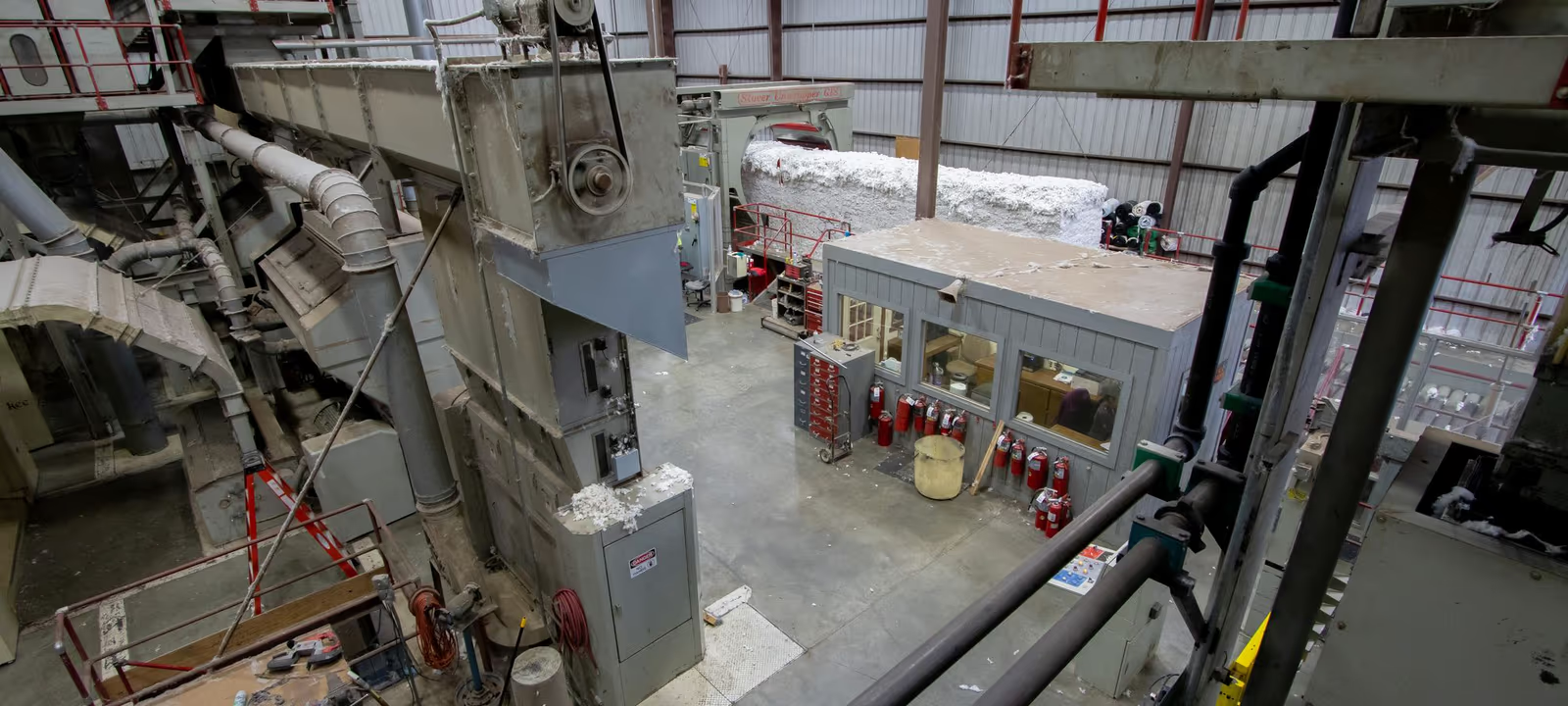
A site visit tells you what a facility is doing on the day you stand in it. An expert call tells you whether that is normal. Neither answers the other's question, and a visit made without a sector baseline usually produces observations nobody can interpret.
What does a site visit show?
Physical reality that nobody has an incentive to describe accurately: actual utilization against stated capacity, maintenance condition, how much inventory is genuinely moving through rather than sitting — the things plant and program operators read first.
It also shows you things nobody thought to mention. A yard full of finished goods, a line running at half speed, a maintenance bay with three machines stripped — none of which appears in a management presentation and all of which changes a question.
| Site visit | Expert call | |
|---|---|---|
| Answers | What is physically happening at this facility | Whether what you saw is normal for the sector |
| Cost driver | Travel, access, time on site | The expert's hour |
| Fails when | You have no baseline to compare against | The question is about physical condition |
What does an expert call add?
Interpretation. Half-speed on a line means one thing in a sector where changeovers dominate and something else where they do not, and only someone who has run comparable operations can tell you which, which is what an expert call buys.
It also covers ground a visit cannot reach: contract structure, pricing behavior, what the customer relationship actually looks like. Most supply-chain risk is commercial rather than physical — a contract up for renewal moves a number no walkthrough will show.
Which questions need physical presence?
Condition, utilization, throughput and storage. Anything where the question is what is physically there and how hard it is working.
Anything about price, contracts, customer behavior or competitive position does not, and funding travel to answer those questions is a common and expensive substitution of activity for evidence.
There is also a middle category worth naming: questions that are physical but do not need you personally. Condition, layout and equipment can frequently be established from photographs, a technical adviser already local to the site, or someone who worked there recently, and any of those costs a fraction of a visit. The question is whether presence adds anything the record cannot.
What does a visit actually cost?
Travel and time on site dominate, which usually makes a single visit more expensive than several calls. Access is the other cost, and it is not always available on the timetable a process runs to.
The decision should turn on whether the question is physical rather than on the price difference, because a cheap answer to the wrong question is not a saving.
How should you sequence the two?
Calls first, visit second. Two or three conversations establish what normal looks like in the sector, so that the visit can identify what is not — which is the only thing a visit is uniquely good for. Building that frame is the same discipline a channel check runs on.
Visiting first produces a notebook of observations and no basis for reading them, and the calls that follow end up being spent describing the site rather than testing the thesis.
The sequence also improves what the visit is allowed to cover. A team that arrives with two or three specific things to check gets a focused walkthrough; one that arrives without them gets the standard tour, which is designed to be reassuring and is the same tour everybody else received.