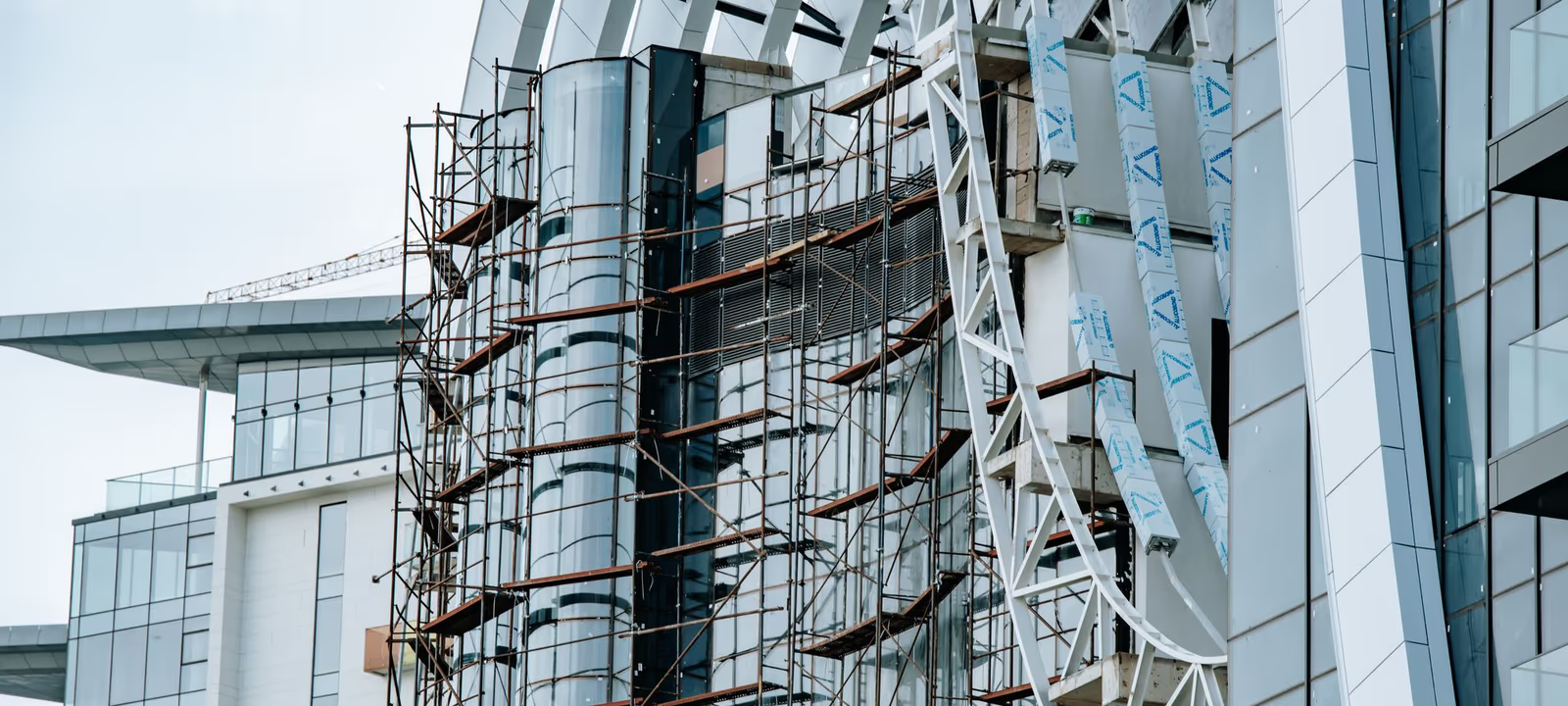
Cost overruns are usually visible in subcontractor behavior months before they appear in a cost report. Late procurement, packages going out to fewer bidders, and specification changes agreed verbally are all early signals — and all describable by people on the project.
What actually causes cost overruns?
Scope and sequence far more often than input prices. Late design changes, packages procured against an incomplete specification, and sequence disruption compound in a way a materials-price assumption never captures — and they land on the delivery date the income schedule was underwritten against.
Input prices are the explanation most often given because they are external and measurable. They are rarely the largest component.
The ordering also tells you something about the team rather than only about the project. A contractor attributing an overrun to input prices when the packages went out against an incomplete design is describing a cause they do not control, which is comfortable and not diagnostic. Where a management team can describe the sequence failures precisely, that is usually a good sign about everything else.
| Cost report | Procurement behavior | |
|---|---|---|
| Records | Committed cost | What the market is willing to price |
| Updates | Monthly, after commitment | Continuously, as packages go out |
| Leads by | Nothing | Months, in most programs |
When does an overrun become visible?
In procurement, months before the cost report. When packages go out late or attract fewer bidders, the price is already moving; the report records it a cycle or two later once commitments are made.
Bid coverage is the single most useful early metric and it is almost never in the reporting pack.
Fewer bidders is the earliest signal because it is a market judgment rather than a project one. Subcontractors decline to bid when they read the program as unachievable or the risk allocation as unreasonable, and their collective decision is available before any of them has priced anything. It is also easy to obtain: the bid list and the returns against it exist in the project's own records.
What do subcontractors see first?
Whether the program is achievable, and whether they are pricing risk into their bids. A subcontractor pricing defensively is telling you something about the project that no report will state, and will say so on a screened call.
They also see the sequence problems first, because they are the ones asked to work around them.
Defensive pricing shows up in the shape of a bid rather than only in its total. Higher provisional sums, tighter qualifications and shorter validity periods all say the same thing about how a subcontractor reads the program, and they say it in a document that has already been produced. A quantity surveyor can read that pattern quickly if asked to.
Why do cost reports lag?
Because they record committed cost, and commitment follows negotiation. A package under dispute sits at its original value until settled, which can be a quarter after everyone involved knows the number has moved — the same lag that makes a queue position a poor date.
That is correct accounting and poor early warning, and the two are frequently confused.
The lag is also asymmetric, which compounds the problem. Savings are recognized when they are certain and costs when they are committed, so a report tends to show the bad news later than the good. Reading a cost report as a forecast rather than as a record of committed position produces an optimism the accounting never intended.
What should you ask a contractor?
About the procurement schedule and bid coverage, not about the cost forecast. The forecast is a position that has been reviewed by people with an interest in it; procurement behavior is the kind of evidence an investment committee can act on.
Asking how many bidders returned prices on the last three packages is a short question with a lot of information in it.